“Digital transformation” sounds like something for multinationals with large IT departments and consultancy budgets. For a family-run manufacturer, a second-generation distributor or a long-established trade supplier, the phrase can feel intimidating — or irrelevant.
But strip away the jargon and it means something simple: using modern tools to make the business easier to buy from and easier to run. That doesn’t require a massive programme. It requires a sensible sequence of practical steps.
Why established businesses hesitate
The reasons are understandable:
- “What we do works.” The business has succeeded for years without it.
- Previous bad experiences with software that cost money and wasn’t used
- Fear of disruption to operations and customer relationships
- Unclear return on investment
- Not knowing where to start
All valid. Which is why the right approach is incremental, low-risk and tied to clear business outcomes.
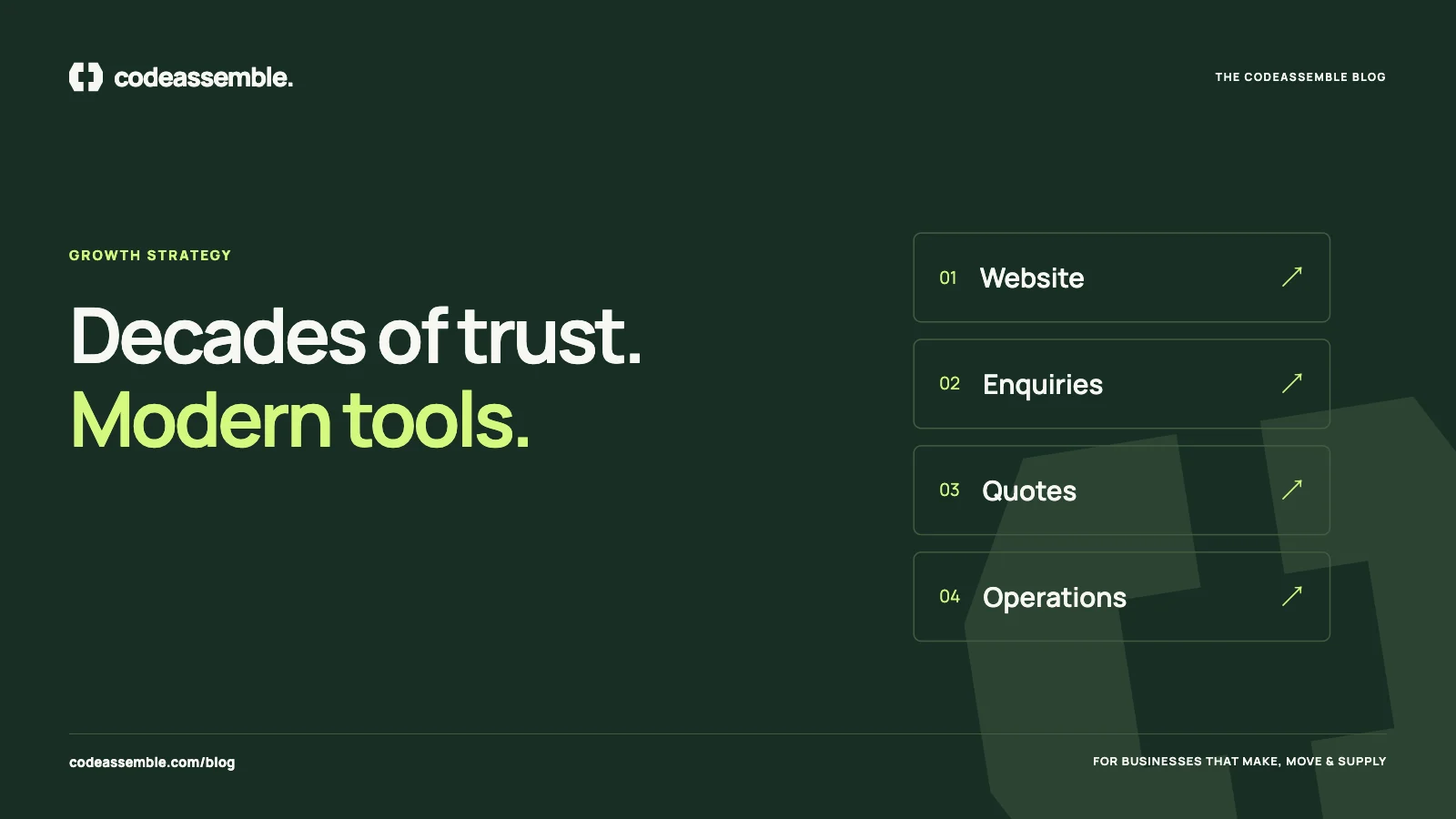
The roadmap
Stage 1: Fix the front door
Your website is how new customers, international buyers and potential employees first meet your business. If it’s outdated, unclear or broken on mobile, everything else suffers.
Goal: a clear, credible website that explains what you do and makes enquiring easy.
Start here if: you’re embarrassed by your website, enquiries are rare, or competitors look more established online. See nine signs your website is costing you enquiries.
Stage 2: Catch every enquiry
Once more enquiries arrive, make sure none are lost. Bring website, email, phone and WhatsApp enquiries into one place, assign an owner and follow up consistently.
Goal: every enquiry recorded, answered and tracked.
Start here if: you suspect leads slip through the cracks. See leads lost in inboxes and WhatsApp.
Stage 3: Speed up quotes and orders
Automate the steps between enquiry and invoice: consistent pricing, faster quotes, orders without re-keying.
Goal: faster responses, fewer errors, less admin.
Start here if: quotes take days or orders are typed in more than once. See from enquiry to invoice.
Stage 4: Replace fragile spreadsheets
Move critical processes — order tracking, production scheduling, customer pricing — from spreadsheets into a focused internal system.
Goal: one source of truth with the right access for each person.
Start here if: the business depends on a spreadsheet only one person understands. See when it’s time for custom software.
Stage 5: Serve customers directly
Give repeat customers self-service access to orders, pricing, documents and status.
Goal: easier to buy from, less routine admin.
Start here if: your team spends much of its time answering repeat questions. See why your distributors want a portal.
Principles for making it work
Start with pain, not technology. Choose the problem that costs the most or frustrates customers most, and solve that first.
Keep each step small. A focused project delivered in weeks builds confidence and shows value before the next investment.
Involve the people who do the work. Your team knows where the friction is. They’ll also be the ones using the new tools.
Use what you have where possible. Connecting existing tools is often cheaper and less disruptive than replacing them.
Own your systems and data. Make sure you receive source code, access and documentation, so you’re not locked into one supplier.
Measure the result. Agree in advance how you’ll know whether each step worked — faster quotes, more enquiries, fewer errors.
Respect what made the business successful
Digital tools shouldn’t replace what makes an established business valuable: relationships, expertise, reliability and reputation. They should make those qualities more visible to new buyers and free your people to spend more time on them.
Modernising doesn’t mean becoming a different business. It means making the business you’ve built easier to find, easier to buy from and easier to run.
A partner for the next chapter
CodeAssemble works with established businesses that want to modernise practically: bespoke websites, business automation and custom web applications, each scoped as a focused step. You can read how we work, then tell us where your business feels stuck. We’ll suggest where to start — even if it’s smaller than you expected.