Nobody wakes up and decides their website is outdated. It happens slowly. The site launched with good intentions, the person who managed it moved on, products changed, and the website stayed the same. Meanwhile, every buyer who visits it forms an opinion about your business.
For established B2B companies — manufacturers, wholesalers, engineering contractors, logistics providers — the website is often the first thing a new buyer checks after hearing your name. Here are nine signs it’s working against you.
1. You apologise for it
If your sales team says “don’t look at the website, I’ll send you the brochure”, the website has stopped doing its job. That small apology tells the buyer something about attention to detail — exactly the quality you want them to associate with your products.
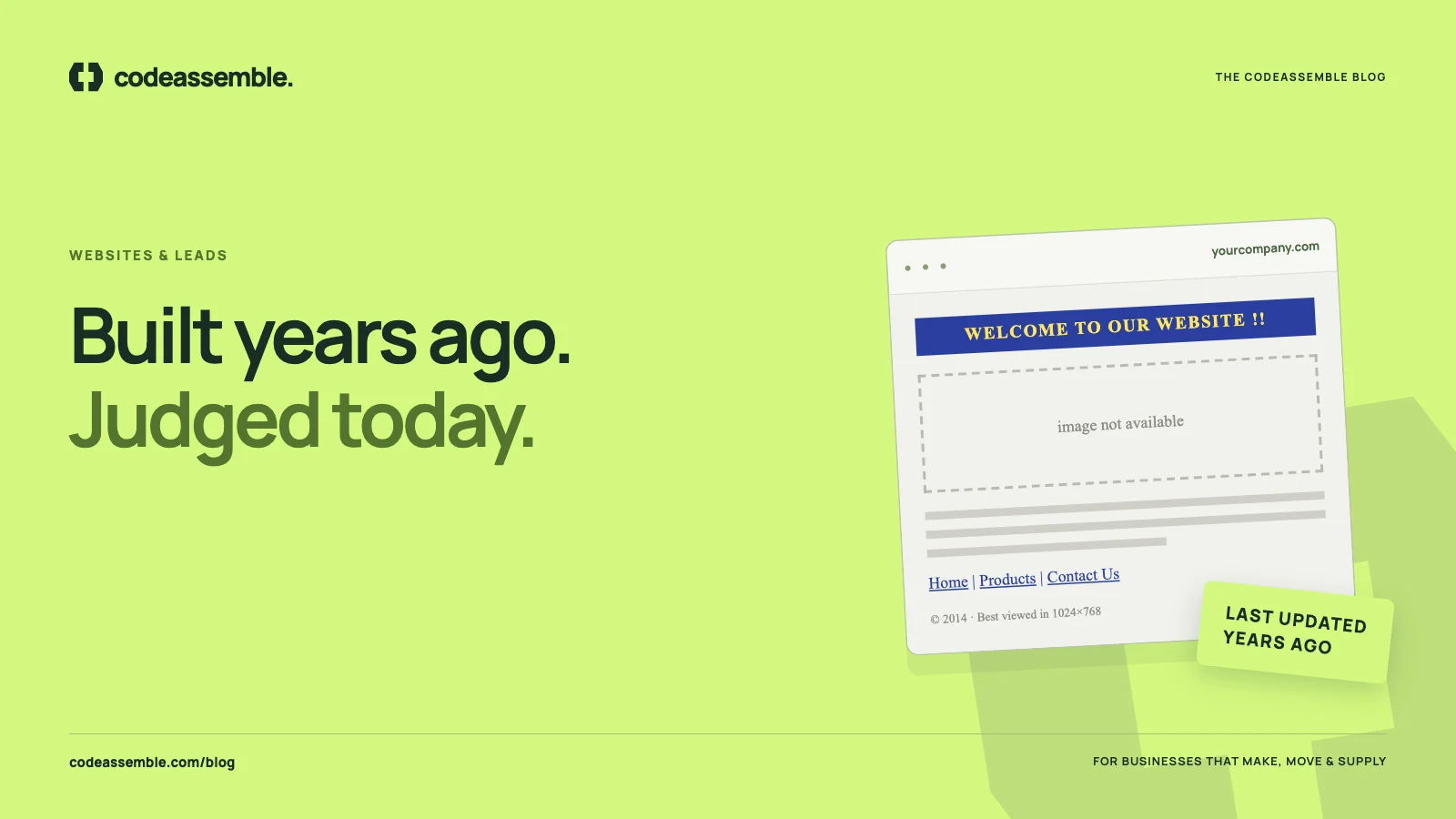
2. The copyright year, news page or “latest products” are years old
Buyers notice dates. A news section that ends in 2019 or a “new product launch” from a decade ago suggests the business might have slowed down — or closed. If you can’t keep a section current, remove it.
3. It looks wrong on a phone
Open your website on your own phone. Can you read the text without zooming? Can you tap the phone number? Does the product table fit the screen? Many B2B buyers — especially engineers, site managers and owners — first check a supplier on mobile, often from a link shared in a message.
4. Your products, services or capabilities have changed
Perhaps you added a new production line, moved into export, earned a certification or stopped selling a product range. If the website still describes the business you were, buyers looking for the business you are won’t find you.
5. Nobody knows how to update it
It’s common for an old website to be locked inside a theme, page builder or hosting account that only one former employee or freelancer understood. When a simple text change requires a support ticket and a week of waiting, the website stops evolving.
6. The browser shows “Not secure”, or pages load slowly
A missing or expired SSL certificate triggers a warning in every modern browser. Slow loading — often caused by oversized images, outdated plugins and cheap shared hosting — makes buyers wait. Both erode trust before a single word is read.
7. Enquiries are rare, vague or mostly spam
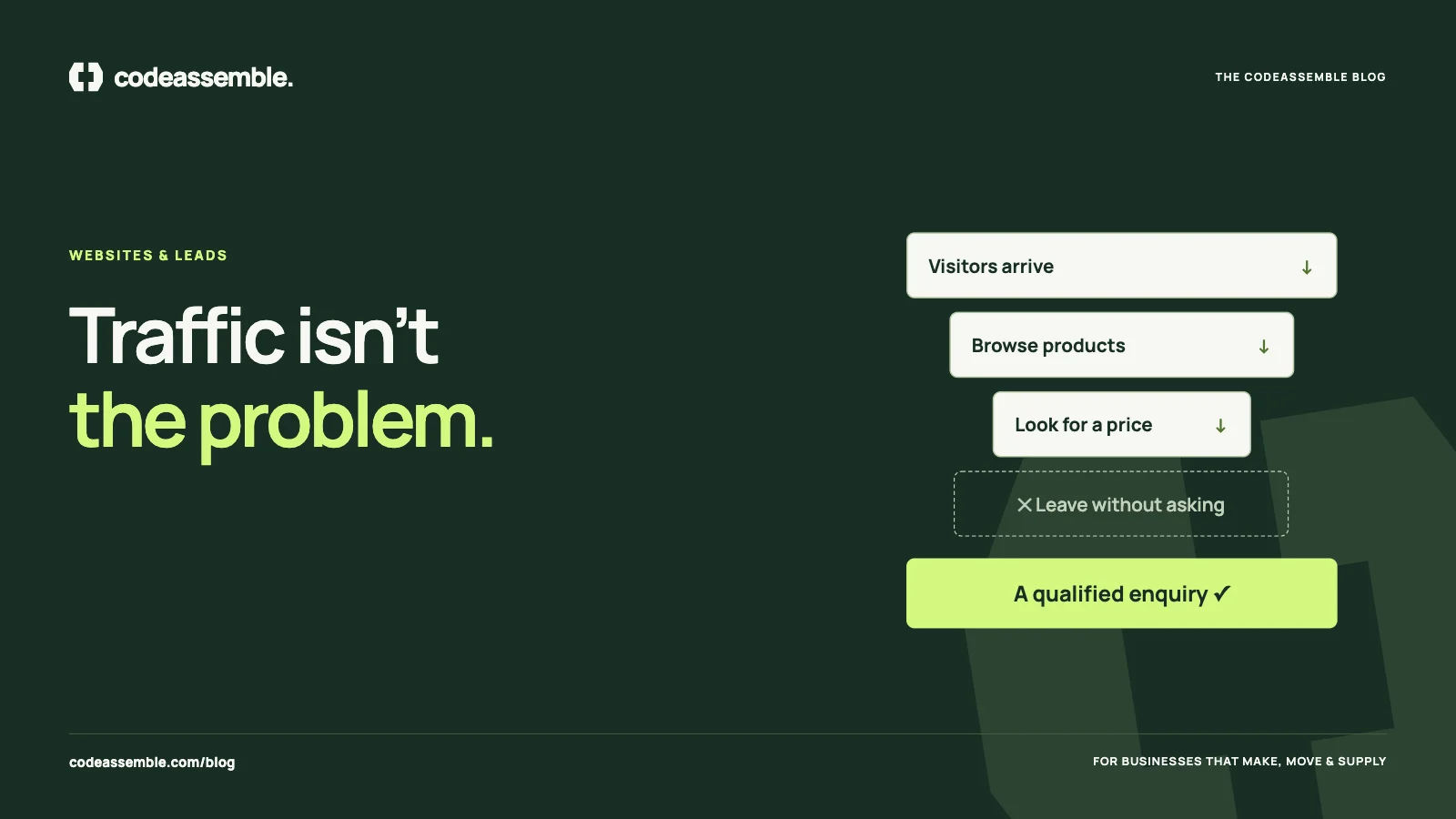
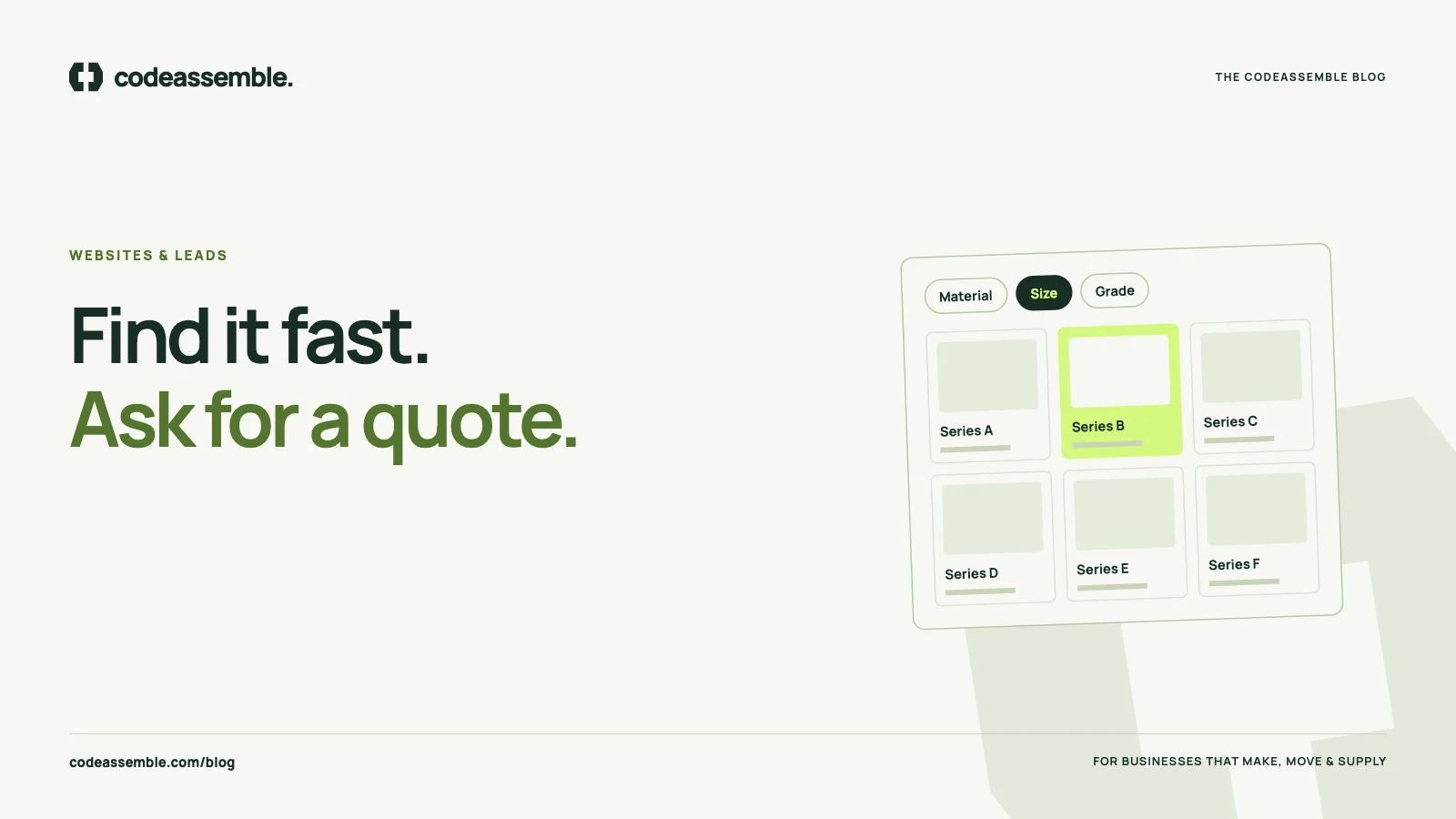
If the contact form mainly delivers spam and the occasional “please send price list”, the issue is usually the journey, not the market. A good website encourages specific, qualified enquiries by asking the right questions at the right moment. We explain how in designing a request-for-quote journey.
8. You don’t know what the website achieves
Can you answer these questions?
- How many people visited last month?
- Which pages did they view?
- How many sent an enquiry, and from which page?
If not, decisions about the website are guesswork. Basic, privacy-conscious analytics and enquiry tracking are part of any modern build. See how to tell whether your website is actually working.
9. Your competitors look more established online than you are
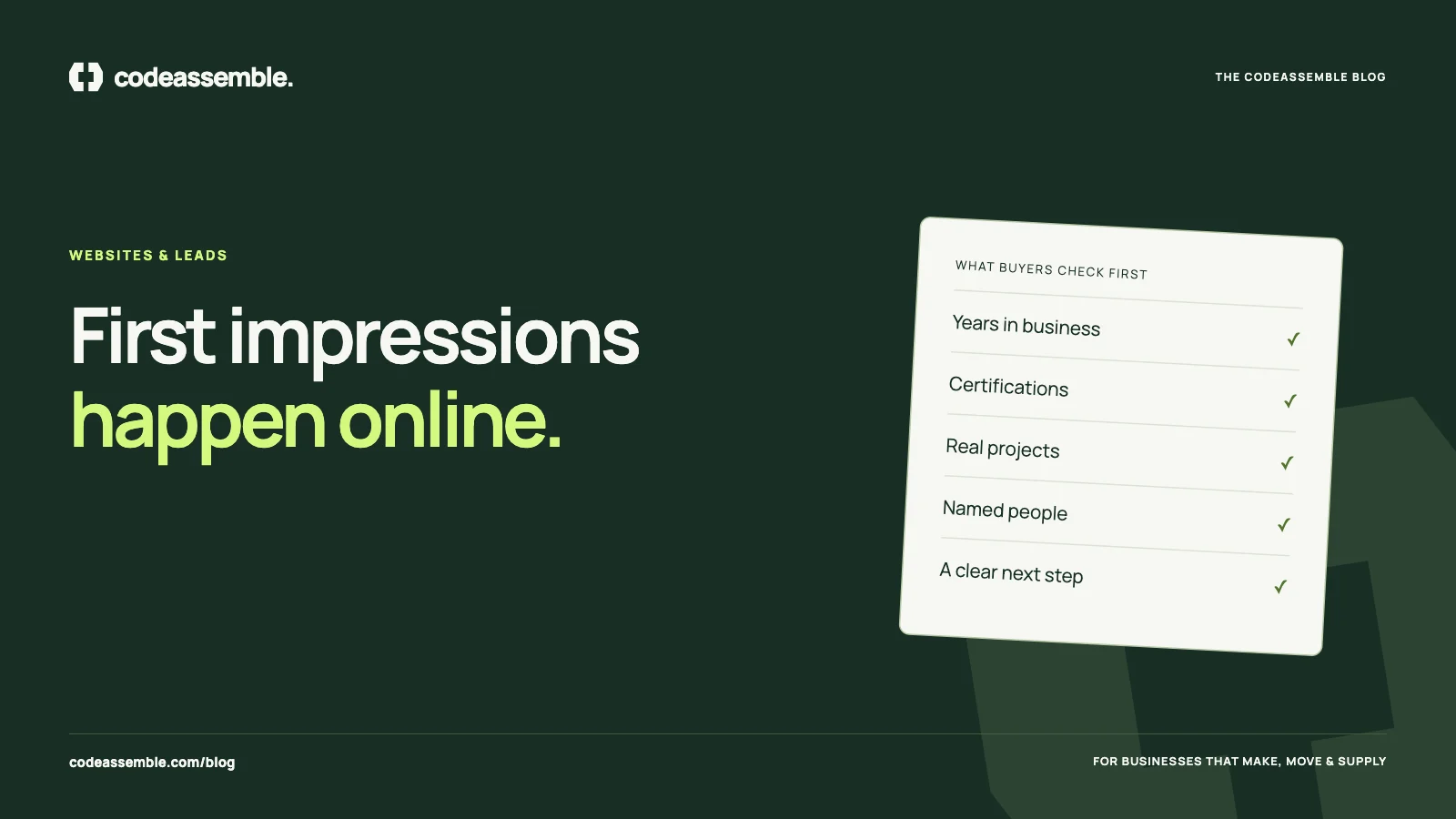
This one stings. A competitor with half your experience, a smaller factory and fewer clients can look like the safer choice simply because their website is clearer, more current and easier to use. Buyers compare what they can see.
What an outdated website really costs
The direct costs are easy to miss because they’re invisible:
- Lost first impressions from buyers who never call
- Sales time spent explaining what the website should have explained
- Weaker pricing power, because a dated presence invites price comparisons
- Hiring friction, as good candidates also judge you by your website
- Security and maintenance risk from software that no longer receives updates — covered in the hidden cost of an old WordPress website
Refresh, repair or rebuild?
Not every old website needs replacing. A practical way to decide:
| Situation | Sensible route |
|---|---|
| Solid structure, outdated copy and photos | Refresh content and imagery |
| Good content, broken mobile layout or slow pages | Technical repair and performance work |
| Dated design, unclear structure, hard to update | Focused rebuild |
| Website must connect to quotes, CRM or orders | Rebuild with integrations |
If three or more of the signs above apply, a focused rebuild is often faster and cheaper than patching. A rebuild also lets you plan redirects so existing search rankings and bookmarked links aren’t lost.
The next step
We help established businesses move from a website they apologise for to one they’re happy to send people to. Our bespoke websites start with your buyers and your offer, not a template. If you’d like a second opinion, share your current website with us and we’ll suggest whether to refresh, repair or rebuild.