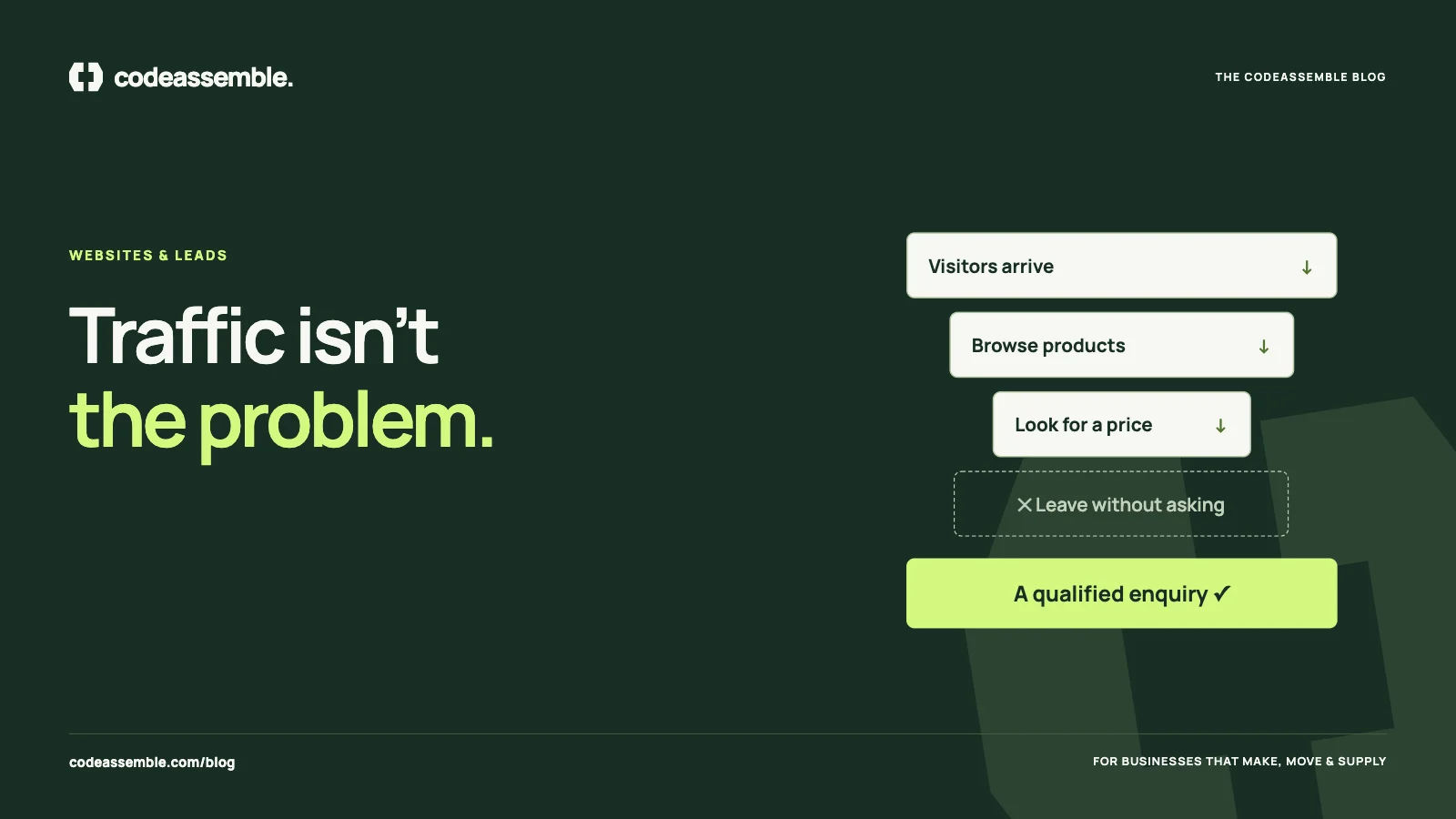
Most established B2B businesses don’t have a traffic problem. They have a conversion problem. Buyers find the website through a search, a trade directory or a business card, look around for a minute or two, and leave without making contact. Nobody in the business notices, because a visitor who leaves quietly never appears in the sales report.
If your website has been online for years and the phone still rings mainly through referrals and old relationships, the website is probably working as a brochure, not as a sales channel. Here’s why that happens and what to fix first.
1. The homepage describes you, not the buyer’s problem
Open the homepage of almost any long-running manufacturer, distributor or engineering firm and you’ll read something like “Established in 1987, we are a leading provider of quality solutions.” It’s true, it’s sincere — and it tells a buyer nothing.
A procurement manager or plant engineer arrives with a specific question: Can this company supply what I need, to my standard, in my quantities, on my timeline? Your homepage has a few seconds to answer it.
Fix: Lead with what you make or do, for whom, and what makes you a safe choice. For example: “Stainless steel valves for water treatment and process plants. Built to drawing, tested before dispatch, supplied across 20 countries.” Your heritage still matters — it just belongs in the second paragraph, as evidence.
2. Products are hard to find and harder to compare
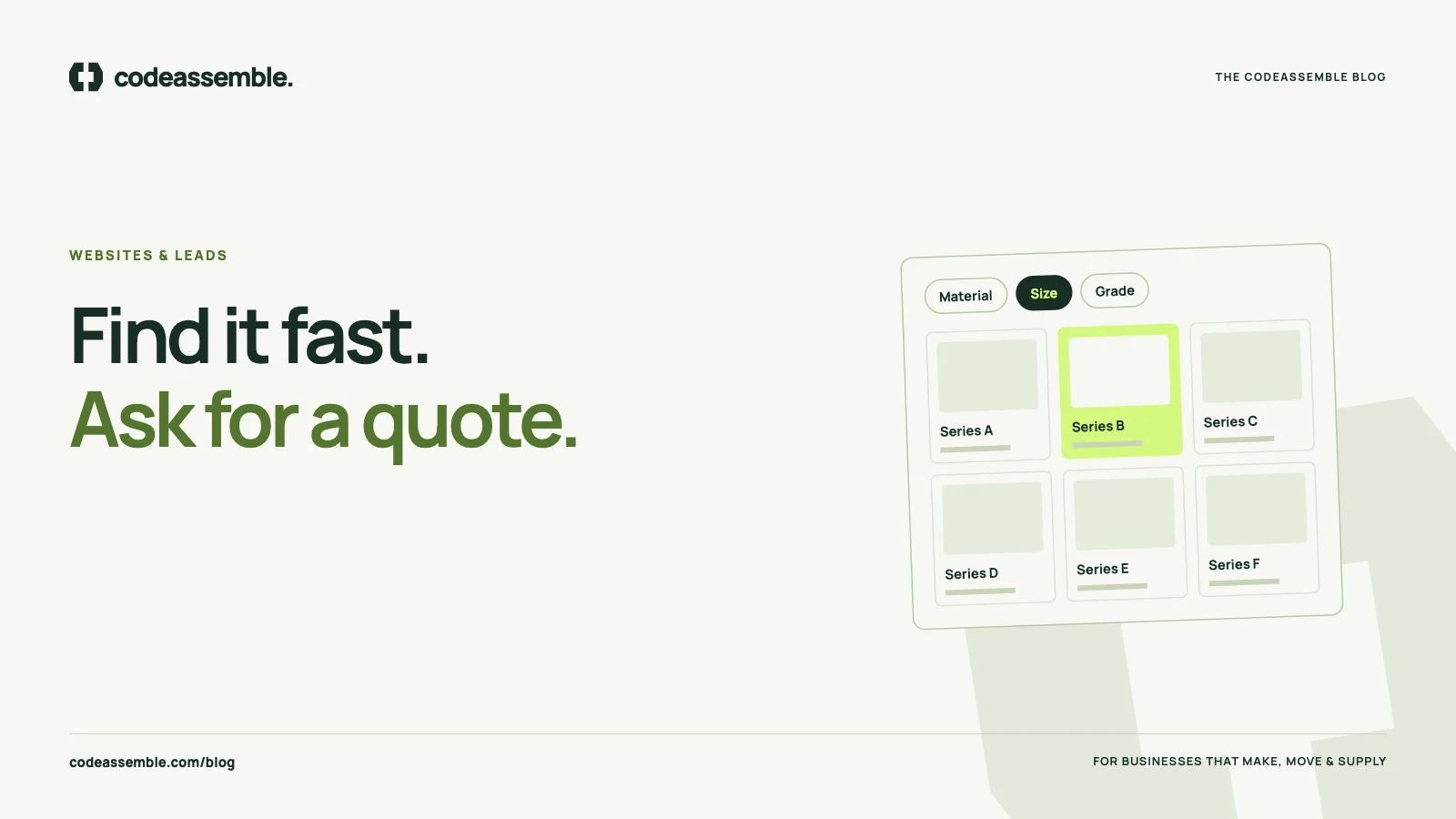
Technical buyers usually know exactly what they want. If they can’t find the right product family, size or grade within a few clicks, they’ll go back to the search results and try your competitor.
Common culprits:
- Product pages that are just a photo and a PDF download
- Categories organised the way your factory thinks, not the way buyers search
- No specifications on the page itself, so nothing can be compared or found by search engines
- Mobile layouts where tables are unreadable
Fix: Structure the catalogue around buyer decisions — application, material, size, standard — and put the key specifications in real HTML text. We’ve covered this in more depth in your product catalogue is your best salesperson.
3. There’s no clear next step — or only one, and it’s too big
“Contact us” is not a call to action. It’s a dead end with a form attached. Different buyers are at different stages, and each needs a sensible next step:
- Early research: download a datasheet or brochure
- Shortlisting: request a sample or technical consultation
- Ready to buy: request a quote with quantities and a drawing
- Existing customers: reorder or check an order status
Fix: Give each important page a relevant next step. A product page should have “Request a quote for this product” with the product already filled in. NRV Packers, one of our clients, places sample requests alongside product enquiries because, for a specialist product, trying it is often the step before buying it.
4. The enquiry form asks the wrong questions
Some forms ask for nothing useful (name, email, message). Others ask for everything — company registration, annual volume, fifteen dropdowns — before the buyer has decided whether you’re worth talking to.
Fix: Ask for what your sales team genuinely needs to give a useful first response: product interest, approximate quantity, delivery location and an optional drawing upload. Make everything else optional. See how to design a request-for-quote journey for a field-by-field guide.
5. Nothing proves you’re real, capable and current
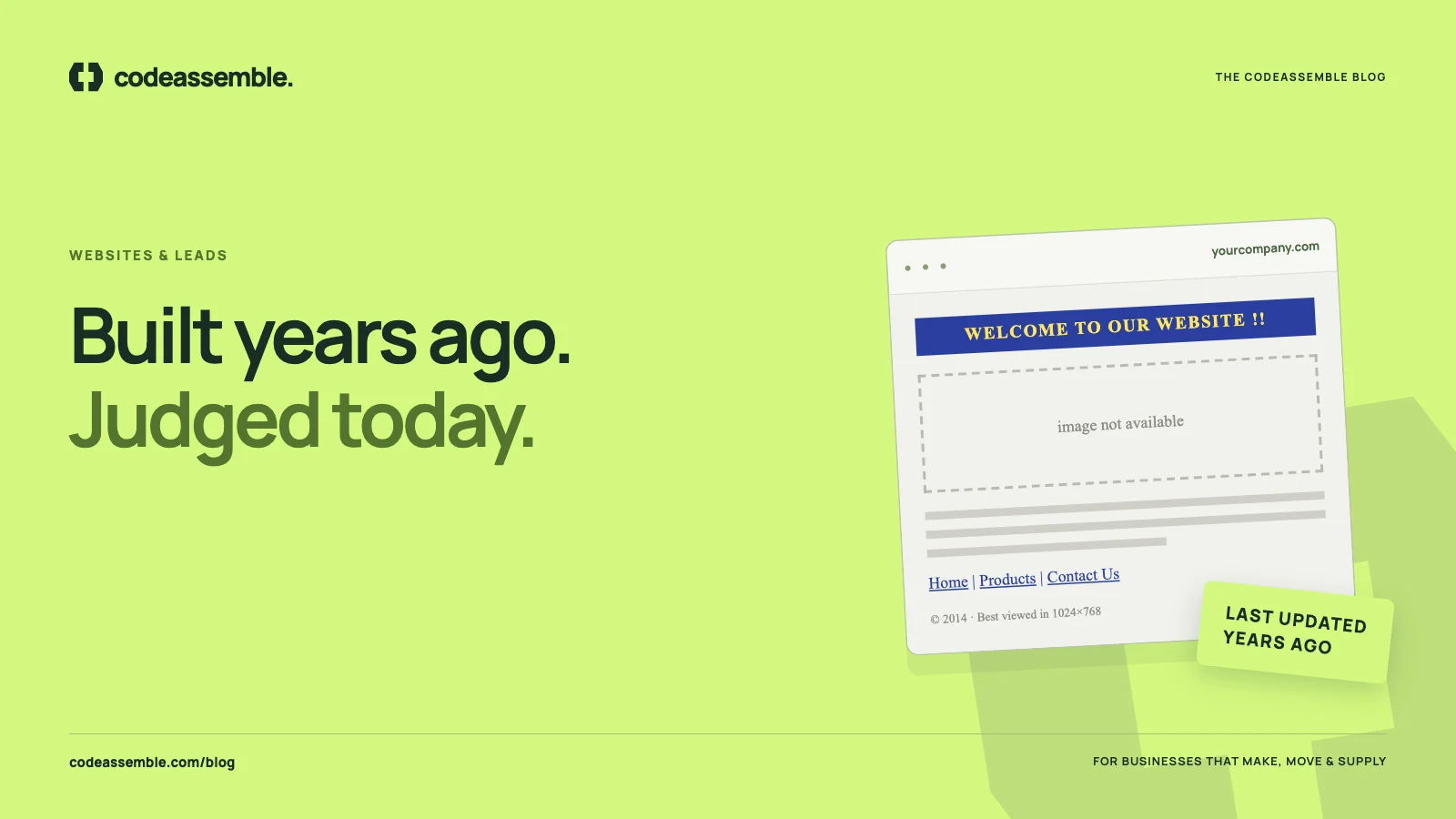
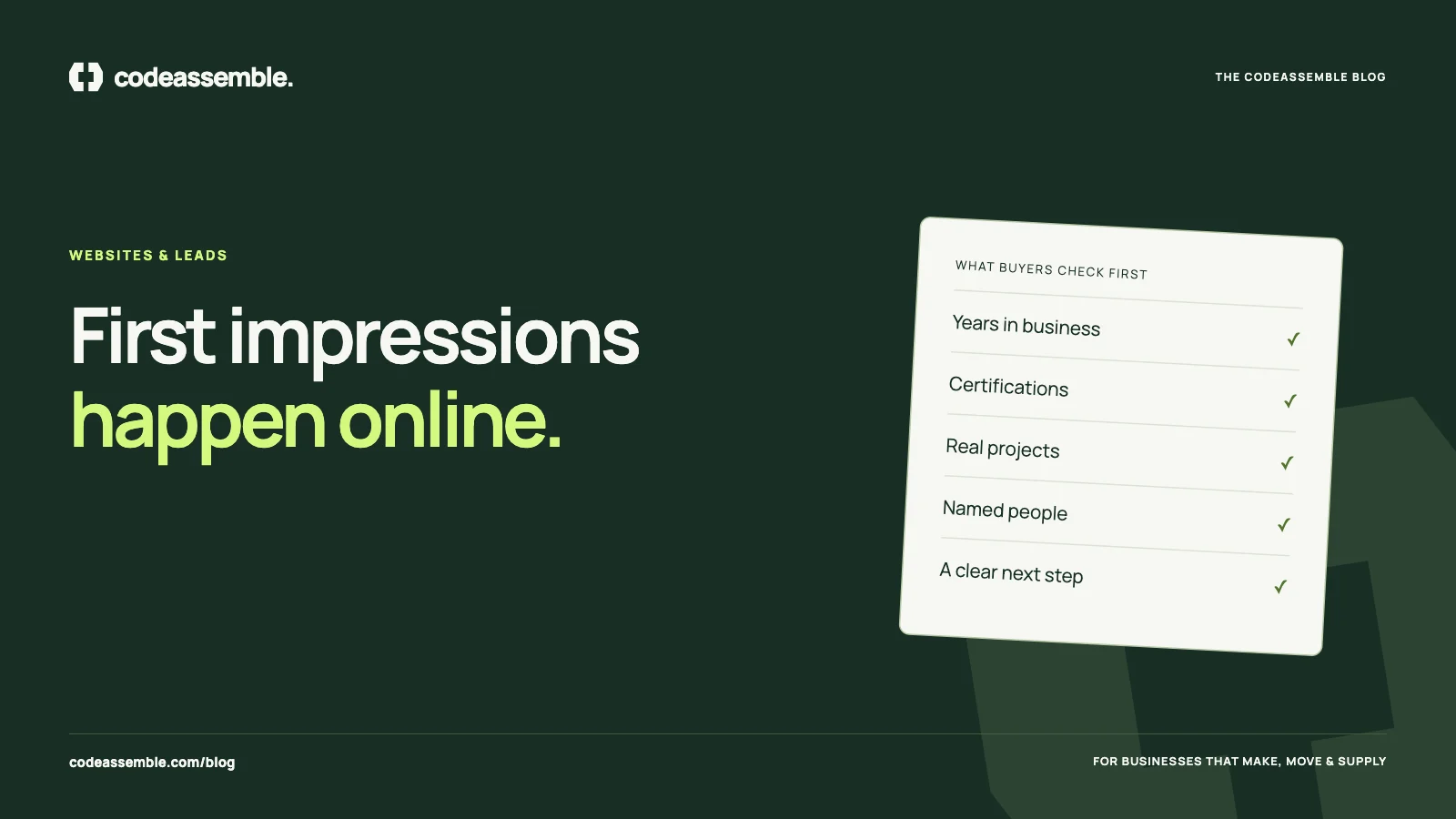
B2B purchases carry risk. A buyer recommending a new supplier to their boss needs reassurance that you exist, can deliver, and will still be around next year. An old website with a 2015 copyright notice, stock photos and no named people raises exactly the doubts you want to remove.
Fix: Show real evidence: your facility, your team, certifications, industries served, project examples, a physical address and named contacts. We explain what buyers look for in your buyers have already judged you before they call.
6. The website is slow, dated or broken on mobile
Engineers check suppliers on their phones during site visits. Purchasing teams open links from WhatsApp. If the site takes several seconds to load, shows a desktop layout squeezed onto a phone, or throws security warnings, many visitors won’t wait to find out how good your products are.
Fix: A modern, lightweight build with responsive layouts, compressed images and a valid security certificate. This is rarely about adding features. It’s usually about removing the weight that a decade of plugins and patches has added.
7. Enquiries arrive — and then go cold
Sometimes the website is generating enquiries, but they land in a shared inbox nobody owns, or in the personal email of someone who left two years ago. The buyer waits, hears nothing and buys elsewhere. From the outside, it looks as though the website doesn’t work.
Fix: Route every enquiry to a named owner, send an immediate acknowledgement, and keep a simple record of status. This doesn’t need an enterprise CRM. Read leads lost in inboxes and WhatsApp for a practical setup.
What to fix first
If you can only do three things this quarter, do them in this order:
- Make sure enquiries reach a person and get a response. It’s the cheapest fix and it protects every other investment.
- Rewrite the homepage and key product pages around the buyer’s question. Clear copy usually beats new design.
- Add specific next steps — quote, sample, datasheet — to the pages that already get traffic.
Then consider whether the underlying website can support what you need. If it’s built on an ageing theme with dozens of plugins, upgrading piece by piece can cost more than a focused rebuild.
A website for an established B2B business doesn’t need to be flashy. It needs to answer the buyer’s question quickly and make the next step obvious.
How we approach it
At CodeAssemble, we build bespoke business websites for manufacturers, suppliers and service businesses that have outgrown their old site. We start with your buyers, your products and the enquiries you actually want, then design the structure around them. The starting scope is a focused website with up to five core pages, and catalogue-led sites are scoped to your range.
If you’re not sure whether you need a rebuild or a few targeted fixes, send us your current website and tell us what kind of enquiries you’d like more of. We’ll tell you honestly which route makes sense.