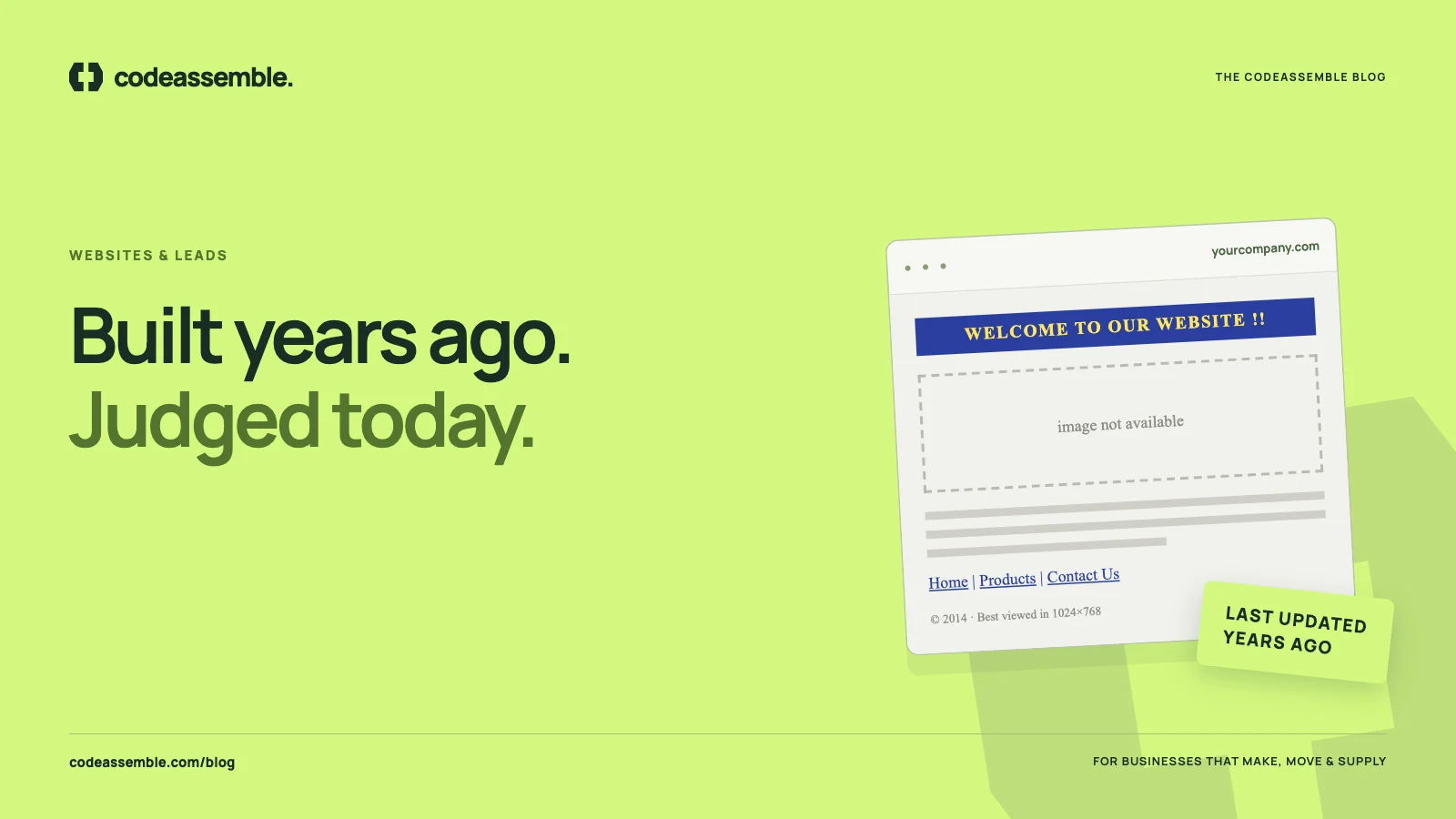
For a manufacturer or distributor, the product catalogue is the heart of the website. It’s what buyers came for. Yet on many established B2B websites, the catalogue is the weakest part: a grid of photos, a few vague descriptions and a link to a 40-page PDF that was last updated several years ago.
A well-built online catalogue does what your best salesperson does. It helps buyers find the right product, answers their technical questions and moves them towards a quote — at any hour, in any timezone.
Why the PDF catalogue isn’t enough
PDF catalogues have their place. Buyers like to download and share them. But as the primary way to present products online, they fall short:
- Search engines struggle with them. Specifications locked inside a PDF are far less likely to help a buyer find you than the same information on a web page.
- They’re painful on a phone. Pinching and zooming through tables isn’t how anyone wants to choose a component.
- They go out of date. One price change or discontinued item and the whole file is wrong.
- They don’t lead anywhere. There’s no “request a quote for this item” button on page 23.
Keep the PDF as a download. Build the catalogue as real web pages.
Organise products the way buyers think
Internal product codes and factory categories make sense to your team. Buyers often think differently. They might start from:
- Application: “What do I need for waterproofing a basement?”
- Specification: “I need a 25 mm stainless fitting rated to 16 bar.”
- Industry: “What do you supply for food processing?”
- Product family: “Show me your terminal blocks.”
A good catalogue offers more than one route in. For Unison Connectors, switches, connectors and terminals each have distinct entry points, so technical buyers can identify the right family before asking about specifications. For NRV Packers, the catalogue is grouped by packer type and linked to applications.
What every product page needs
A product page should answer the questions your sales team hears most often. As a starting checklist:
- A clear name and short description in plain language — what it is and what it’s for
- Key specifications in text, not just in an image or PDF — dimensions, materials, ratings, standards
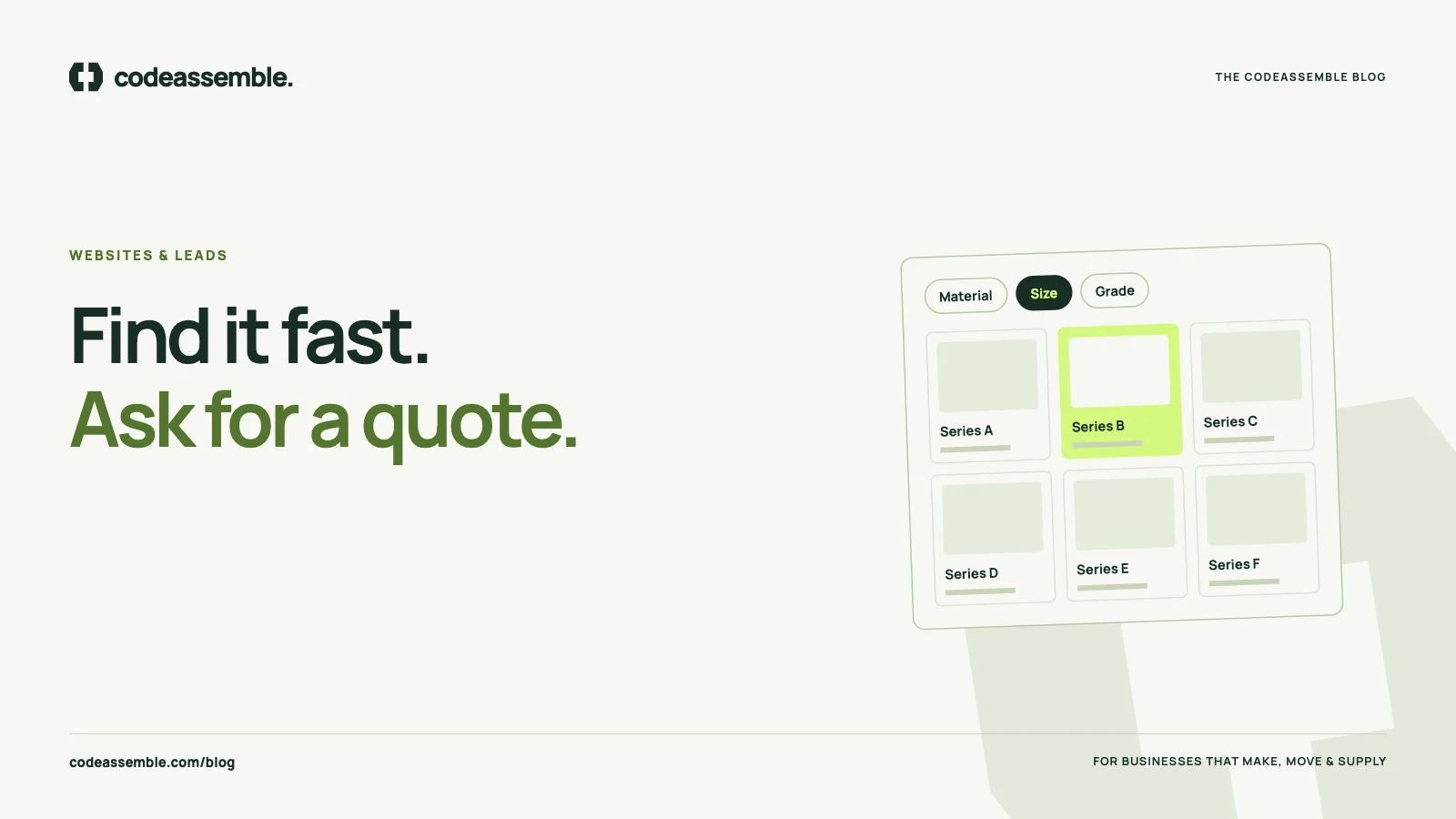
- Variants — sizes, grades or finishes, ideally in a readable table
- Applications and industries where the product is used
- Good photography — real products, consistent backgrounds, enough detail to inspect
- Downloads — datasheet, drawing, certificates, installation guide
- Related products and accessories
- A specific next step — request a quote, request a sample, ask a technical question
That last item is the one most often missing. A form that already knows which product the buyer was looking at produces a far more useful enquiry than a generic contact page.
Filtering and search for larger ranges
If you have dozens or hundreds of products, browsing alone isn’t enough. Consider:
- Filters for the specifications buyers care about, such as size, material, pressure rating or voltage
- Site search that understands product codes and common alternative names
- Comparison tables for closely related items
- Cross-references to competitor or legacy part numbers, if buyers search by them
These features need structured product data behind them, which is also what makes the catalogue easy to keep up to date.
Keep the catalogue maintainable
The most common reason catalogues decay is that updating them is hard. When adding one product means editing ten pages by hand, it doesn’t happen.
A modern catalogue stores products as structured data — each product a record with fields — and generates the pages from it. Updating a specification updates it everywhere. Depending on your setup, product data can come from a simple content system, a spreadsheet import or your existing ERP or inventory system through an integration.
Turn browsing into enquiries
A catalogue earns its keep when it generates conversations. Practical ways to do that:
- Quote basket: let buyers add several products and request one combined quote
- Sample requests for products buyers want to test
- Technical enquiry routes that go straight to an engineer, not a general inbox
- Pre-filled forms that carry the product, variant and page into the enquiry
Then make sure those enquiries reach someone quickly. We cover that in designing a request-for-quote journey and leads lost in inboxes and WhatsApp.
SEO: your catalogue is a search asset
Every well-structured product page is a chance to be found by a buyer searching for exactly that product. Specialist B2B searches are often low in volume but high in intent: someone searching for a specific grade of resin or a particular connector type is usually close to buying. We explore this in SEO for “boring” industries.
Your catalogue already exists in your team’s heads and your price lists. The website should make it searchable, comparable and easy to act on.
Building a better catalogue
At CodeAssemble, we build catalogue-led websites for industrial and B2B businesses, from focused product ranges to larger catalogues connected to existing tools through website + integrations projects. Tell us about your range — roughly how many products, where the data lives today and the enquiries you want — and we’ll suggest a sensible structure.