Owners of specialist B2B businesses often assume SEO isn’t for them. “Nobody searches for what we make,” they say. Or: “Our customers know us already.” It’s true that the search volume for, say, a particular grade of injection resin or a type of industrial connector is tiny compared with consumer products.
That’s exactly why it’s an opportunity.
Why niche B2B search is valuable
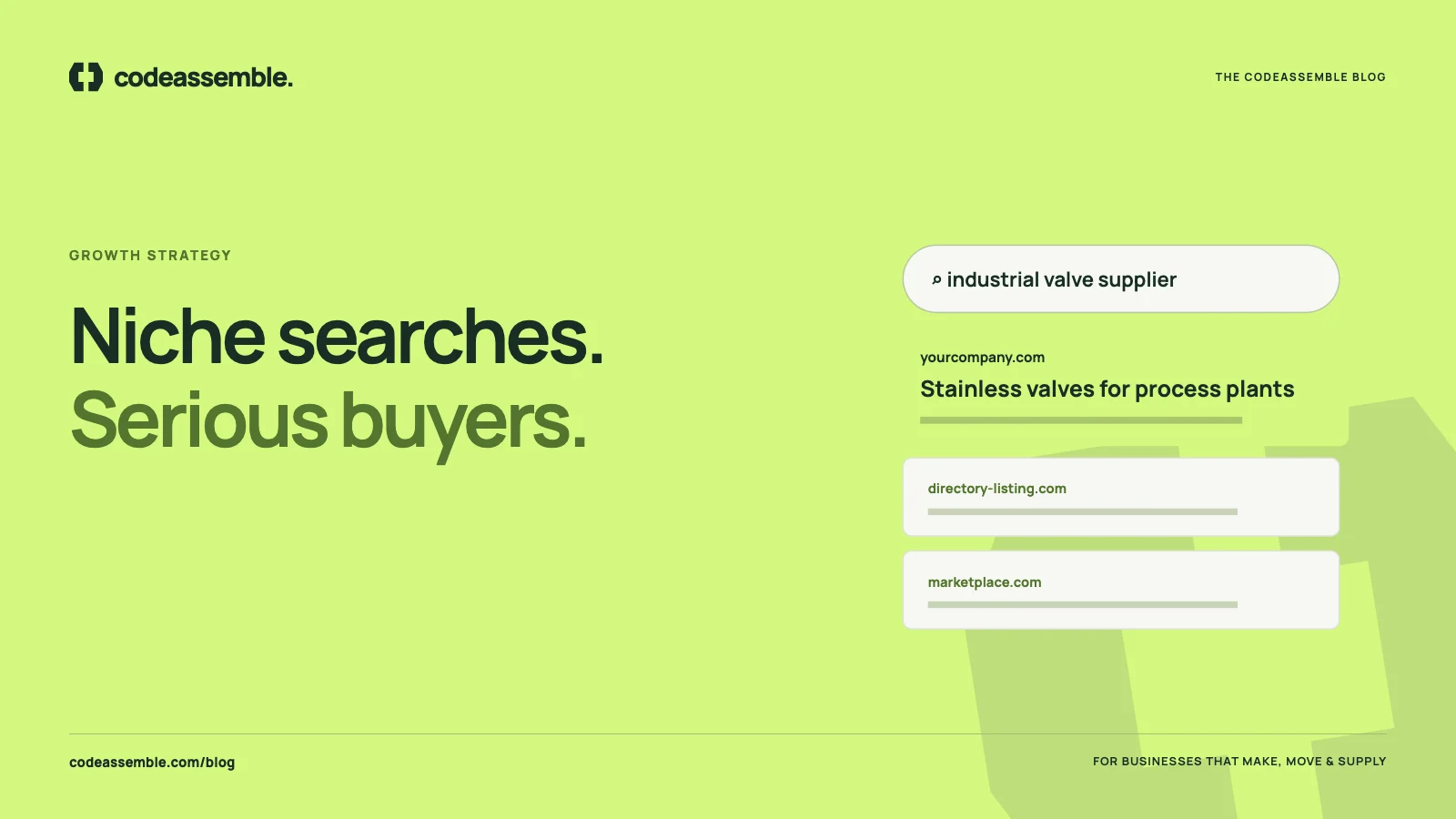
Consider who searches for a precise industrial term. It’s rarely a casual browser. It’s an engineer specifying a component, a procurement officer looking for an alternative supplier, or a contractor who needs a product for a job next week. Specialist searches tend to come from people with a real requirement.
And because many established competitors have thin, outdated websites, the competition for those searches is often weaker than you’d expect.
Start with how buyers actually search
Your team uses internal product names and industry shorthand. Buyers might use different terms. Good keyword research for a B2B business looks at:
- Product terms: generic names, technical names, common alternatives and part numbers
- Application terms: “waterproofing for basement walls”, “connectors for solar installations”
- Problem terms: “how to stop water leakage in concrete cracks”
- Supplier terms: “manufacturer”, “supplier”, “exporter”, with a location where relevant
- Comparison terms: “X vs Y”, “alternative to brand Z”
Ask your sales team which questions buyers ask most. Those questions are often your best content topics.
The foundations: technical SEO
Before content, make sure search engines can properly read your website:
- Fast, mobile-friendly pages
- Clean, descriptive URLs, such as
/products/stainless-steel-ball-valves/ - Unique titles and descriptions for each page
- Proper heading structure
- Product information as text, not only in images or PDFs — see your product catalogue is your best salesperson
- Structured data to help search engines understand products, organisations and FAQs
- An XML sitemap and sensible internal links
- Redirects from old URLs when a site is rebuilt — see the hidden cost of an old WordPress website
Content that earns visibility and trust
Product and category pages
Your core SEO asset. Each important product or family deserves a page with a clear description, specifications, applications and a relevant next step.
Application and industry pages
Pages that explain how your products solve specific problems in specific industries connect your catalogue to the way buyers think.
Technical guides and articles
Answer the questions your engineers and salespeople answer every week: selection guides, installation advice, standards explained, common mistakes. These attract buyers early in their research and position you as the expert.
Case studies
Real examples of problems solved for real customers support both search visibility and credibility.
Local and international search
Many B2B businesses serve specific regions, or want to grow export sales.
- Local: keep your Google Business Profile accurate and complete, with consistent name, address and phone details across directories
- International: consider which markets matter, whether content should be translated, and how to signal language and regional versions properly — see selling to international buyers
Be patient — and measure
SEO isn’t instant. New pages typically take time to be discovered and to gain visibility. But well-structured content keeps working for years. Track:
- Which searches show your pages (via Search Console)
- Which pages bring visitors from search
- Which of those visitors send enquiries
See how to tell whether your website is working.
AI search changes the format, not the principle
Buyers increasingly ask AI assistants for supplier suggestions and technical answers. These tools draw on clear, well-structured, credible information published on the web. The same practices that help traditional search — accurate specifics, clear structure, real expertise — make your business easier for AI tools to understand and cite.
In a niche market, you don’t need millions of searches. You need to be found by the few buyers who are looking for exactly what you do.
Build a website search engines understand
Every bespoke website we build includes technical SEO foundations: page structure, metadata, structured data and a sitemap. For catalogue-led businesses, we structure product content so it’s useful to buyers and searchable. Tell us what your buyers search for, and we’ll help you plan pages around it.