WordPress powers a large share of the web, and for good reason. It’s flexible, widely supported and, when well maintained, perfectly capable. This article isn’t an argument against WordPress.
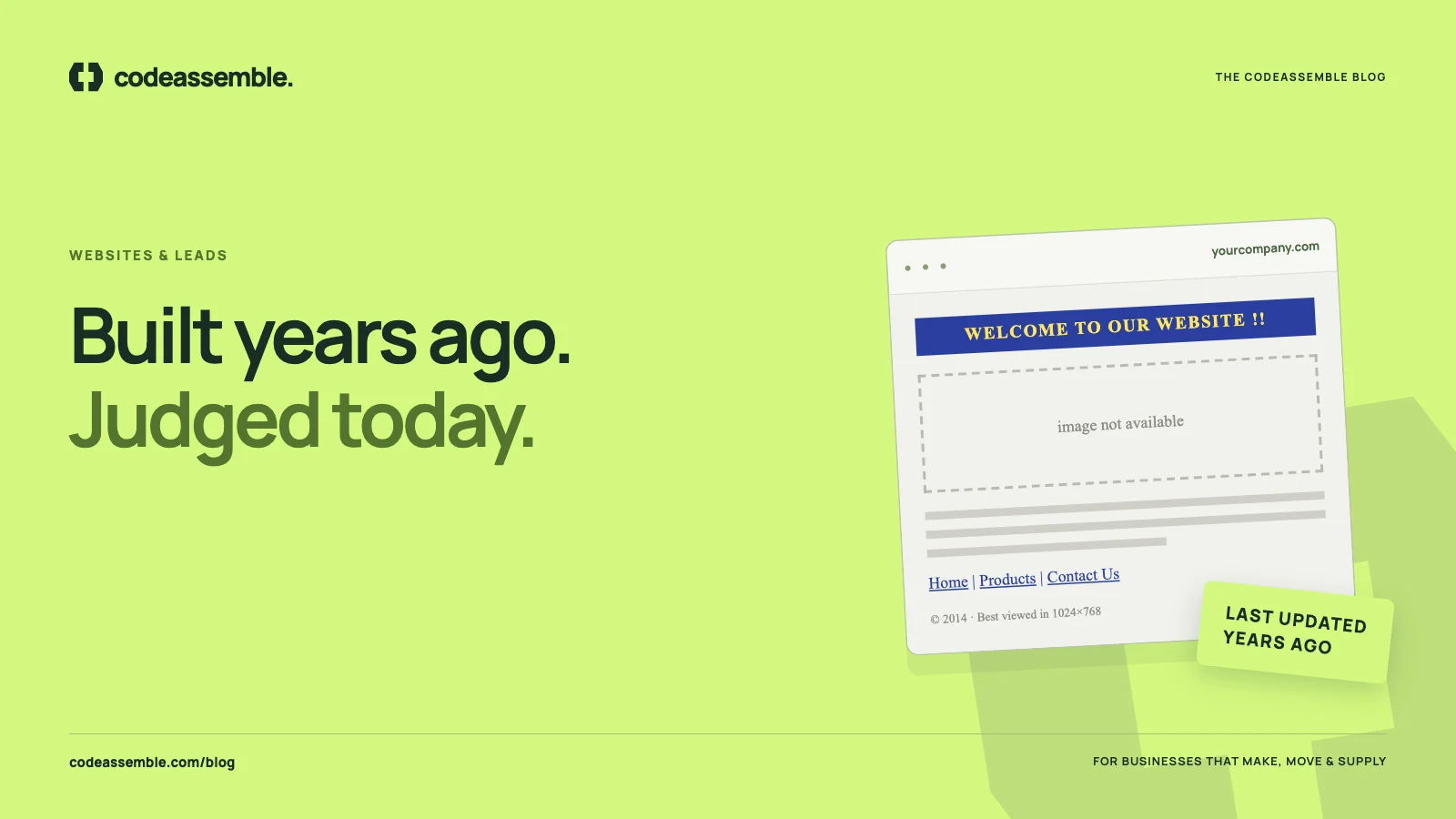
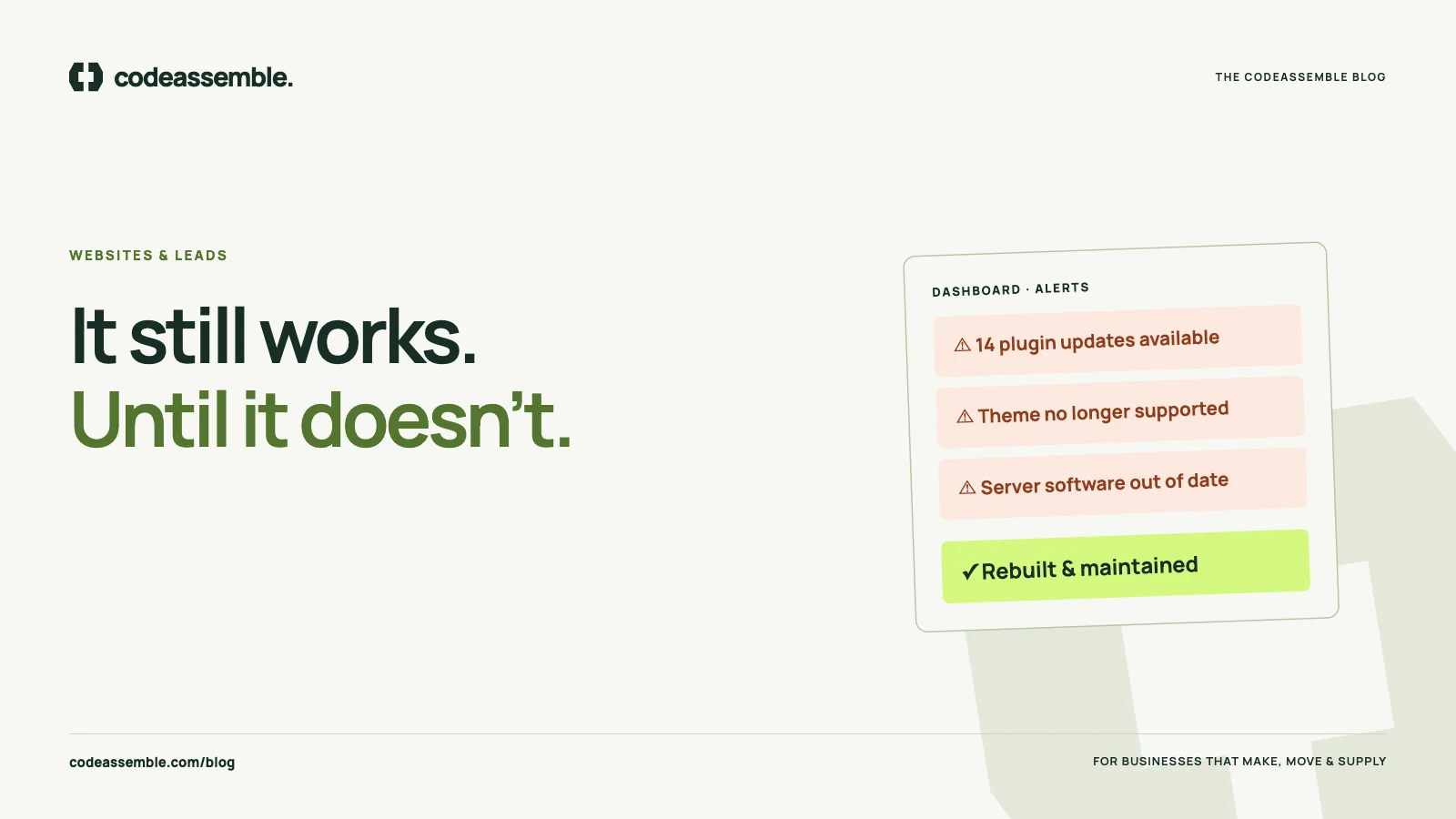
It’s about a specific situation we see often in established B2B businesses: a WordPress website built years ago, by someone who has since moved on, running an old theme and a long list of plugins, updated rarely or not at all. It still loads. It still shows the products. And it quietly costs the business more than anyone realises.
The costs you can see
These tend to show up on an invoice or a bad day:
- Emergency fixes when an update breaks the layout or a plugin conflicts with another
- Hosting bills for plans upgraded to compensate for a slow site
- Premium plugin renewals for features nobody remembers adding
- Developer time to make small changes in a page builder nobody on the team understands
The costs you can’t see
These are larger and harder to measure:
Security exposure
Outdated plugins and themes are a common way websites get compromised. The result can be spam pages injected into your site, redirects to unrelated websites, a hosting suspension or a browser warning that tells every visitor your site is unsafe. For a B2B business, being flagged as unsafe is a serious blow to credibility.
Slow performance
Years of plugins, page-builder markup, sliders and uncompressed images add weight. Each page asks the browser to download much more than it needs. Visitors on mobile connections, or buyers browsing from other continents, feel this most.
Lost enquiries
Forms are often the first thing to break silently. A mail setting changes, a form plugin stops sending, or spam protection blocks genuine submissions. Unless someone tests the form regularly, the business may stop receiving website enquiries without noticing.
Lock-in
When the website depends on a particular page builder or a theme that’s no longer supported, changing anything becomes difficult. The content is tangled with the layout. Updating the design means rebuilding pages one by one.
Opportunity cost
Perhaps the biggest cost: the website can’t keep up with the business. Adding a product category, a new market, a quote basket or an integration with your CRM feels too risky, so it doesn’t happen.
Maintain, modernise or rebuild?
Here’s a practical way to decide.
Maintain if the site is reasonably current, the theme is supported, there are relatively few plugins and the structure still fits your business. A maintenance plan with regular updates, backups and form testing may be all you need.
Modernise if the foundations are sound but the design, content or performance has fallen behind. A focused refresh can go a long way.
Rebuild if several of these apply:
- The theme or page builder is no longer supported
- Updating plugins regularly breaks something
- Nobody can confidently edit the site
- The design and structure no longer reflect your business
- You need features the current setup can’t support cleanly
What a rebuild should include
A rebuild isn’t just a new design. To protect what you’ve built, it should include:
- A content audit — what to keep, update, merge or remove
- URL mapping and redirects, so search rankings and bookmarked links carry over
- Form and enquiry testing before and after launch
- Performance-conscious development, with images and code sized for the job
- A clear editing approach, so your team can update content without breaking layouts
- Analytics, so you can see whether the new site performs better — see how to measure B2B website performance
Does the new site have to be WordPress?
Not necessarily — and not necessarily not. The right platform depends on who will edit the site, how often, what it must connect to and how much content it holds. For some businesses, a well-built WordPress site is the right answer. For others, a lighter custom build with a simple editing workflow is faster, more secure and cheaper to run. We recommend a platform after understanding your requirements, not before.
The question isn’t whether WordPress is good or bad. It’s whether your current website still serves your business.
Ready for the next chapter?
If your website is a few years and many plugins past its best, our website upgrade service is designed for exactly this. We review your current pages and enquiry paths, plan the move properly and build a bespoke website around your business today. Send us your current site for an honest view on whether to maintain, modernise or rebuild.