“Is our website working?” is one of the most common questions we hear from business owners — and one of the hardest to answer when nothing is being measured. Many established B2B companies either have no analytics at all, or have an analytics account nobody has opened since it was set up.
The good news: you don’t need a complex dashboard. You need a few measures that connect the website to the business.
Why visitor numbers alone mislead
Traffic is the number most people look at first, and it’s the least useful on its own. A specialist manufacturer might receive relatively few visitors a month, but if a meaningful share are genuine buyers, that’s a strong website. Another business might get far more traffic from irrelevant searches and generate nothing.
What matters is who visits, what they do and whether they make contact.
The five measures that matter
1. Enquiries, by source
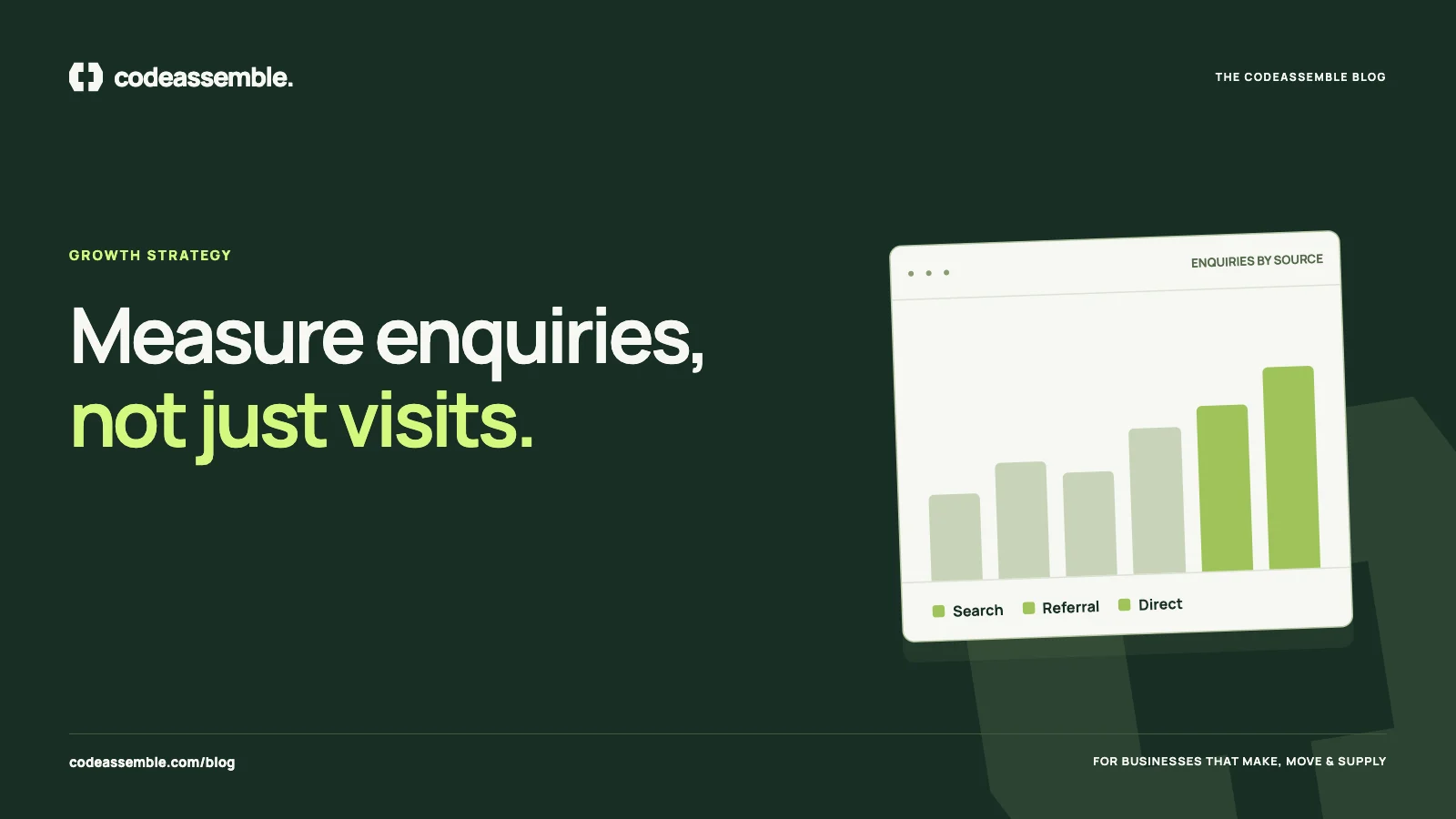
The most important number. How many quote requests, contact forms, calls, emails and WhatsApp messages came through the website this month — and where did those visitors come from? Search, referral, a directory, a campaign, a direct visit?
2. Enquiry quality
Not all enquiries are equal. Ask your sales team to tag each one simply: qualified, unqualified, spam. Over time you’ll see which pages and sources bring real buyers.
3. Key page engagement
Are visitors reaching your product, capability and quote pages? If most leave after the homepage, the problem is likely clarity or navigation. If they reach product pages but don’t enquire, the problem is likely the next step.
4. Form starts versus completions
If many people start your RFQ form but few finish, something in the form is putting them off — too many fields, a confusing step or an error on mobile. See how to design a request-for-quote journey.
5. Enquiry-to-order
The final link: how many website enquiries became quotes, and how many quotes became orders? This usually lives in your CRM or sales records rather than in web analytics, but it’s what tells you whether the website pays for itself.
Setting up tracking without overcomplicating it
A practical setup for most B2B websites includes:
- Web analytics such as Google Analytics, installed correctly on every page
- Event tracking for the actions that matter: quote requests, form starts, phone and email clicks, WhatsApp clicks, datasheet downloads
- Campaign tags (UTM parameters) on links in emails, adverts and social posts so you can see what drove each visit
- Search Console to see which searches show your website and which pages appear
- A simple enquiry log — in a CRM or internal tool — recording source and outcome
On our own website, for example, we track proposal clicks, WhatsApp and email clicks, case study views and form submissions as separate events, so we can see which pages lead to conversations.
Respect privacy
Analytics should be proportionate and transparent. Explain what you track in a clear privacy notice, avoid collecting personal data you don’t need and consider the consent requirements in the markets you serve. This builds trust with buyers — and keeps you on the right side of regulations.
A monthly ten-minute review
Once tracking is in place, a short monthly review is enough for most businesses:
- How many enquiries did the website generate, and from which sources?
- How many were qualified?
- Which pages did those buyers visit before enquiring?
- Where did visitors drop off?
- What’s one change to test next month?
Over a few months, this turns website decisions from opinion into evidence.
Common findings — and what they usually mean
| What you see | What it often means |
|---|---|
| Good traffic, few enquiries | Unclear offer, weak next steps or a broken form |
| Enquiries mostly unqualified | Messaging too broad; form asks too little |
| Visitors leave from product pages | Missing specifications or no product-specific action |
| Strong mobile traffic, weak mobile enquiries | Mobile layout or form problems |
| Almost no search traffic | Thin content or technical SEO issues — see SEO for niche B2B industries |
Close the loop with sales
The most valuable insight usually comes from connecting website data with what sales knows. Which enquiries turned into good customers? Which industries, products or regions? Feed that back into your website content and you start attracting more of the right buyers.
If enquiries currently arrive in scattered inboxes, start by bringing them together — see leads lost in inboxes and WhatsApp.
A website you can’t measure is a website you can’t improve.
Want a website you can measure?
Every bespoke website we build includes technical SEO foundations and an enquiry route, and we can set up event tracking for the actions that matter to your business. If you’re not sure whether your current website is working, get in touch — we’ll help you work out what to measure first.