There was a time when a B2B relationship began with a trade fair, a phone call or a visit from a sales representative. Those still matter. But today, before most buyers make contact, they’ve already looked you up.
They’ve searched your company name, visited your website, perhaps checked your LinkedIn page and compared you with two or three alternatives. By the time they call or send an enquiry — if they do — they’ve formed an opinion. In many cases, you were removed from the shortlist without ever knowing you were on it.
Why B2B buyers research first
B2B purchases carry consequences. A wrong supplier can delay a project, fail an audit or create quality problems that land on the buyer’s desk. So buyers do what any careful person does: they reduce risk by gathering evidence before committing.
Your website is the most convenient place for that evidence. It’s available at any hour, in any timezone, without the pressure of a sales conversation. For international buyers, it may be the only evidence available at first.
What buyers are actually checking
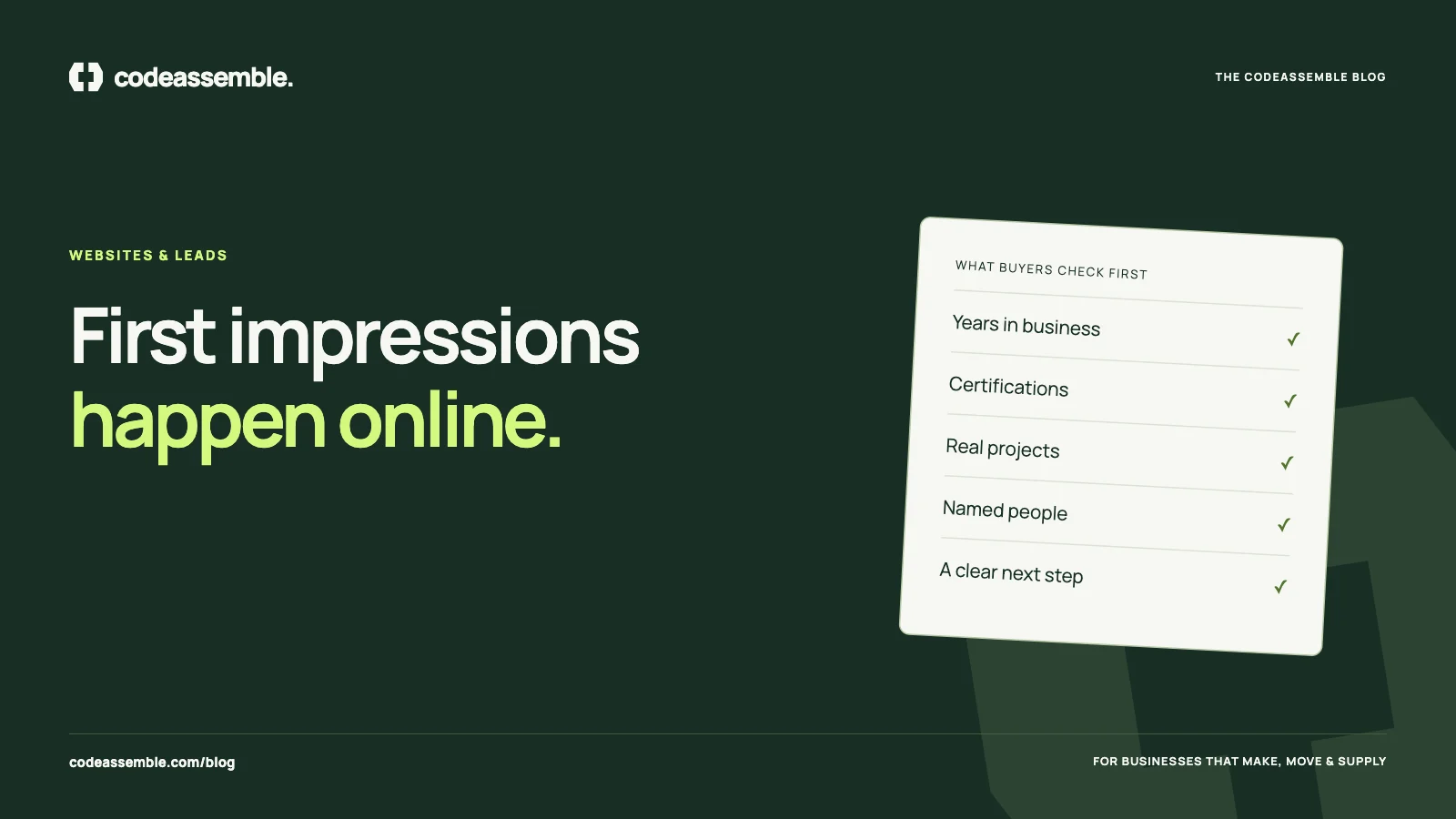
When a procurement manager, engineer or business owner looks at your website, they’re quietly asking five questions.
“Is this company real and established?”
They look for a physical address, a company registration name, photos of real premises and people, and signs of how long you’ve been operating. Stock photos of smiling people in suits and a contact form with no address do the opposite.
“Can they make or supply what I need?”
They want specifics: product ranges, materials, capacities, tolerances, standards, minimum order quantities, industries served. Vague claims like “world-class quality solutions” are skipped. Concrete details are read.
“Have they done this before for someone like me?”
Case studies, project examples, industries and client types help buyers see themselves in your existing work. Even without naming clients, you can describe the type of problem solved and the kind of business you served.
“Will they be easy to work with?”
Clear processes, response expectations, named contacts and simple enquiry routes signal a business that’s organised. A website that’s confusing to navigate suggests a supplier that might be confusing to deal with.
“Are they current?”
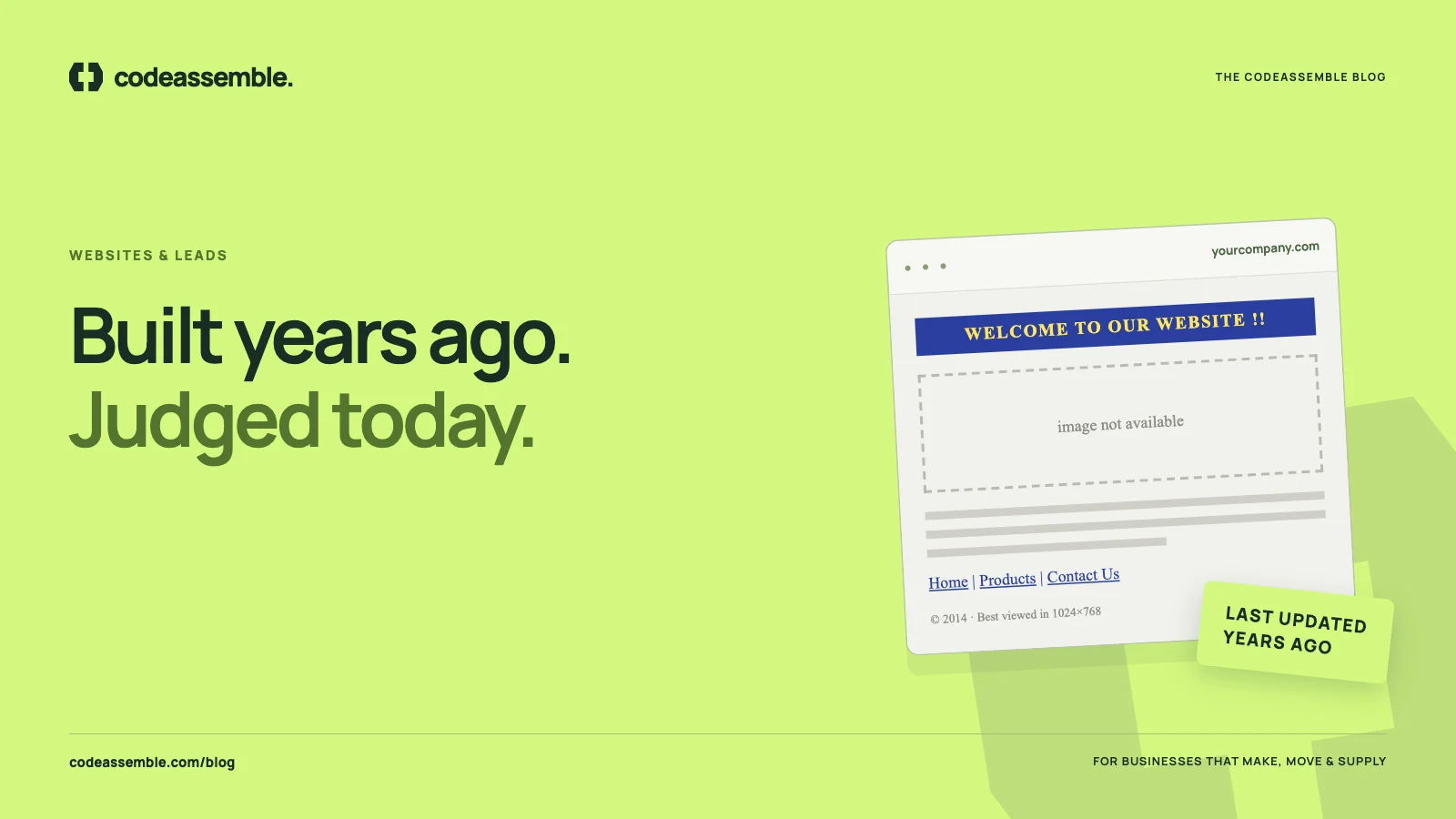
A recent update, current certifications, an active news or blog section, a modern design and a working mobile layout all say the business is active and investing. An old website suggests the opposite — sometimes unfairly. See nine signs your website is quietly costing you enquiries.
How to show credibility without exaggerating
The temptation is to overclaim: “industry leader”, “best quality”, “trusted by thousands”. Experienced buyers discount this language immediately. Credibility comes from verifiable specifics.
Show, don’t claim:
- Instead of “state-of-the-art facility”, show photos of your machines and list key equipment
- Instead of “quality assured”, name your certifications and testing steps
- Instead of “serving clients worldwide”, list the regions or industries you actually supply
- Instead of “experienced team”, introduce the people buyers will deal with
Make it easy to verify: a full company name, registered address, phone number, and consistent details across your website, Google Business Profile and LinkedIn.
Be honest about fit: saying who you’re not right for builds trust with the buyers you are right for.
The details that quietly signal quality
Small things add up:
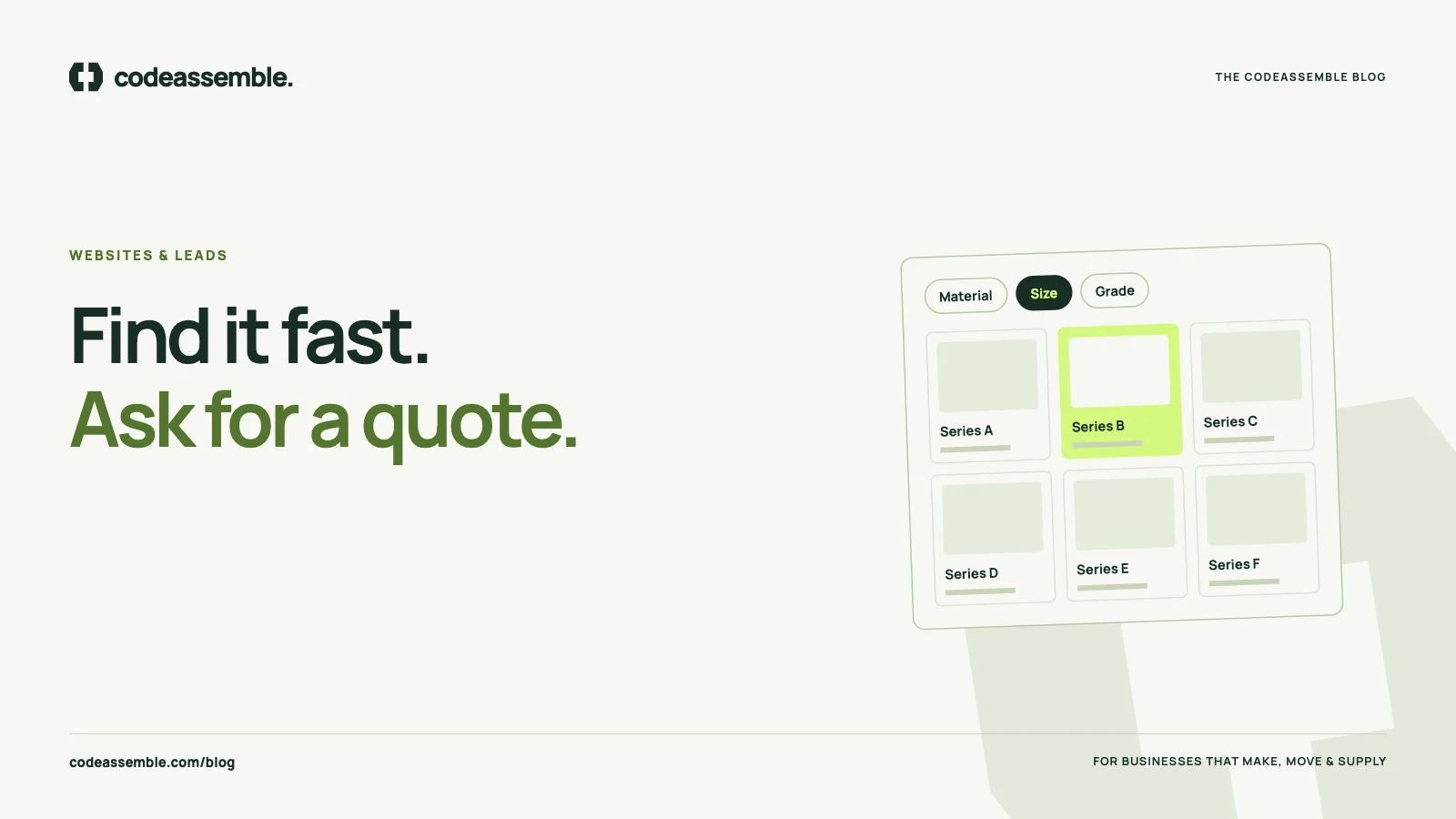
- Product information that is organised, consistent and complete
- Fast loading and no broken links or missing images
- Spelling and grammar that have been checked
- Downloadable datasheets that match the website
- A professional email address rather than a free webmail account
- A clear privacy notice and secure (HTTPS) connection
None of these win business alone. Together, they tell the buyer you pay attention to details — which is exactly what they want from a supplier.
Turning research into contact
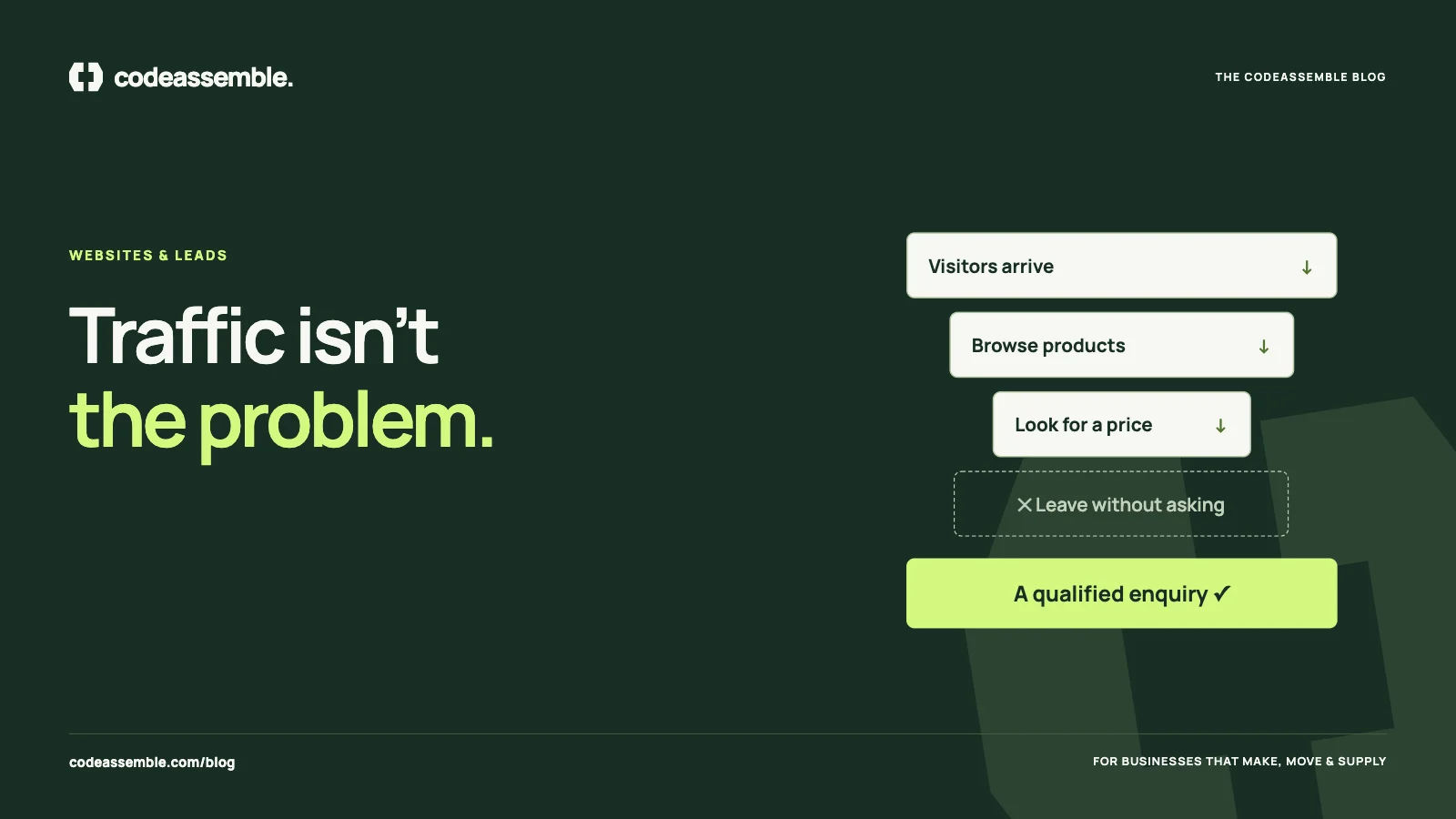
Once a buyer is convinced, the website must make the next step easy. Offer specific actions matched to what they’ve just read: request a quote for this product, ask for a sample, download the specification, book a technical call. We cover this in why your B2B website isn’t generating leads.
Your reputation was built over years. Your website should make it visible in seconds.
How we help
We design bespoke websites that present established businesses accurately and confidently, with real evidence rather than empty claims. You can see how we’ve done this for industrial clients such as Unison Connectors, where product families and supporting information lead to a structured quote request.
If you suspect buyers are judging your business by an old website, let’s talk about what they should see instead.